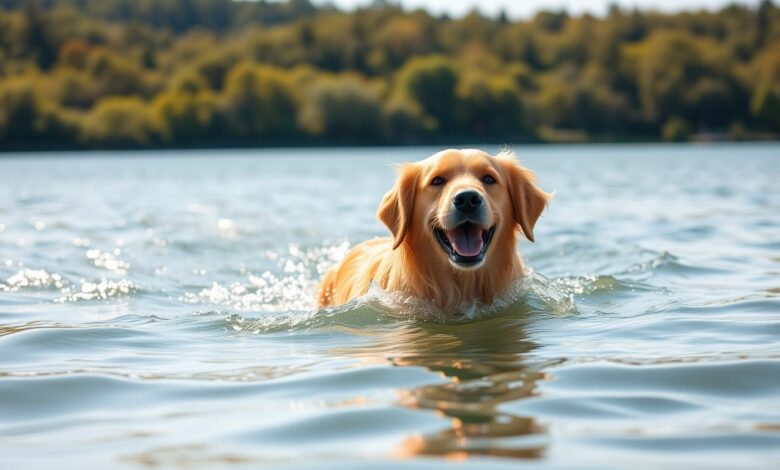
Picture a sunny day by the lake, your loyal companion by your side. The sight of the water might fill you with excitement, but what about your furry friend? That joyful vision can quickly turn to worry if your pal isn’t confident around water.
It’s a common belief that every dog is a born swimmer. This simply isn’t true. While some dogs, like Labrador Retrievers, are natural athletes in the water, others, such as bulldogs, need our help. Their body shape can make swimming a real challenge.
This guide is here to turn that worry into confidence. We’ll walk you through a safe, positive process. You’ll learn how to build your companion’s skills from the first cautious paw-dip to a happy, splashing swim. It’s not just about fun—it’s a vital safety skill that could one day save a life.
Whether your four-legged friend is a water-loving retriever or a more hesitant breed, you’ll find the knowledge here. Our goal is to make swimming a wonderful, bonding experience for you both.
Get Ready: Preparing for a Dog Swimming Adventure
Before you even think about heading to the lake, take a moment to understand your furry friend’s feelings about water. Every dog has a unique personality. Some dogs see a puddle and can’t resist a splash, while others will do anything to stay dry.
Assess Your Dog’s Comfort with Water
Your pal’s breed offers valuable clues. Certain breeds, like Labradors and Newfoundlands, are natural swimmers. They have webbed paws and water-resistant coats.
Other breeds face challenges. Dogs with short legs, long bodies, or heavy chests may struggle. They need extra patience and support.
RELATED: How Much Does Dog Training Cost?
Gather Essential Safety Gear
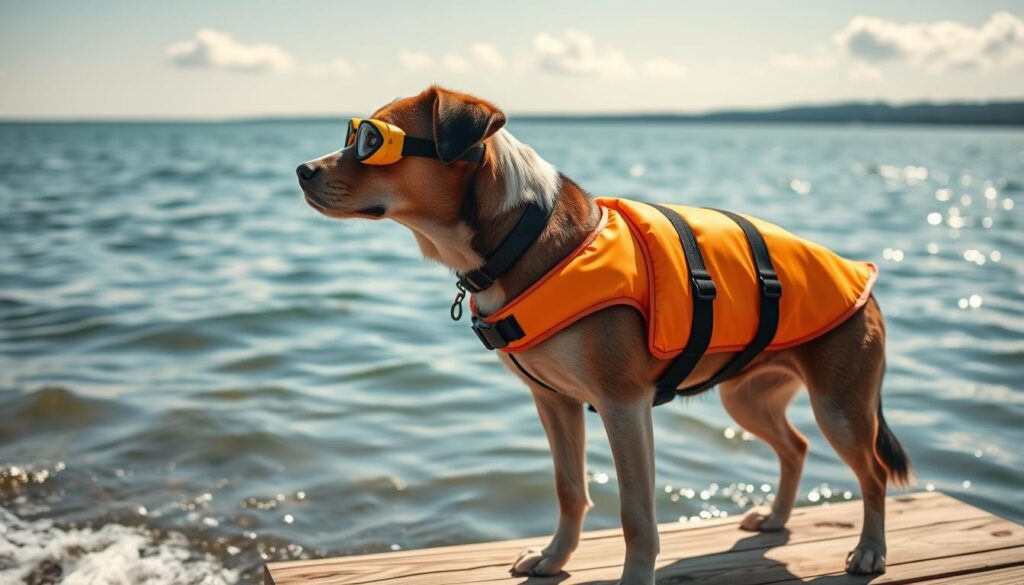
Proper gear is non-negotiable for a safe experience. A well-fitted life jacket is the most important item for your pet. It provides crucial buoyancy and peace of mind.
Also pack towels, a favorite toy, and fresh dog water for drinking. Choose a calm, shallow location for the first session. A gentle slope helps build confidence without fear.
This preparation sets the stage for a positive introduction. It turns potential stress into a fun, bonding adventure.
Teach Your Dog to Swim: Safety and Confidence
The right equipment can transform a potentially stressful water experience into a confident adventure. Proper safety gear provides essential support that builds trust between you and your furry friend.
Introduction to Life Jackets and Flotation Devices
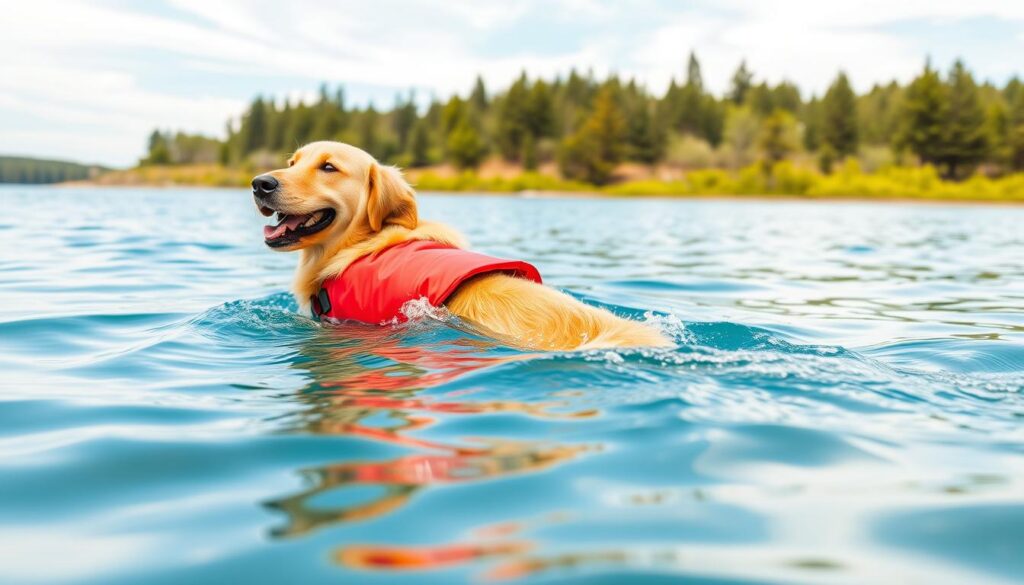
A canine life jacket is crucial for building confidence. It offers buoyancy that prevents panic and allows natural paddling reflexes to activate safely.
Many beginner dogs exhibit “front-wheel drive” swimming. They paddle only with front legs while hind legs dangle. A proper dog life jacket keeps their body level, enabling efficient “four-wheel drive” movement.
Never throw your companion into water. This outdated approach can create lifelong fear. Instead, use positive reinforcement and proper support.
Building Confidence in Shallow Waters
Start where your pal can touch bottom with all four paws. This builds confidence through gradual exposure. Offer gentle encouragement and praise every small success.
Move to slightly deeper areas only when your dog appears relaxed. Always stay close, providing physical support under their belly or holding their jacket handle.
| Safe Approach | Risky Method | Result |
|---|---|---|
| Gradual shallow water introduction | Throwing into deep water | Builds lasting confidence |
| Life jacket support | No flotation device | Prevents panic and exhaustion |
| Positive reinforcement | Sink-or-swim mentality | Creates positive associations |
Remember that even experienced dogs can encounter unexpected drop-offs. Proper safety measures protect your companion during all water activities.
Selecting the Best Dog Flotation Device
Not all canine flotation devices are created equal – understanding the differences matters. The right choice provides crucial safety and builds your companion’s confidence in the water.
Comparing Life Jackets vs. Life Vests
A life jacket offers comprehensive coverage for maximum buoyancy. This type of jacket dog gear is ideal for boating or deep lake adventures. It keeps your pet highly visible with bright colors.
Dog life vests are lighter and cover less body area. They work well for pool sessions or calm pond visits. This jacket style allows more freedom of movement for relaxed activities.
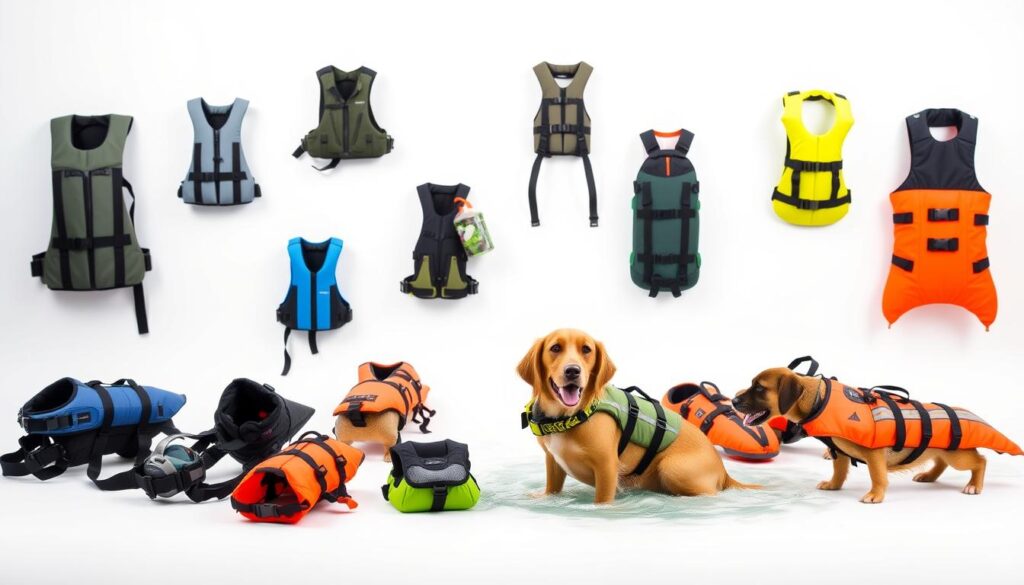
Look for durable, waterproof materials that withstand repeated use. Adjustable straps ensure a snug but comfortable fit. A sturdy handle on top lets you guide or lift your dog when needed.
Additional features like chin support help keep heads above water. Reflective trim enhances visibility during evening activities. Even strong swimmers benefit from a proper life jacket dog in unpredictable conditions.
Remember that proper flotation provides essential backup safety. It protects your dog from fatigue or unexpected currents. Choosing the right gear makes every water experience more secure.
Step-by-Step Dog Swimming Training Techniques
Mastering the right training techniques transforms swimming from a challenge into an exciting adventure for your canine companion. The process focuses on building confidence through clear, manageable steps.
Using Positive Reinforcement
Create a joyful association with the water. Entice your pal into the pool or lake using a favorite toy or tasty treats.
Never pull or force them. Reward every small success with enthusiastic praise. This positive reinforcement builds a mental link between water and fun.
Transitioning from Shallow to Deeper Water
Always start shallow. Let your companion stand comfortably in shallow water first. This allows them to get used to the sensation.
Move deeper only when they seem relaxed. Hold the handle on their life jacket for support. This gradual approach is key to safe swimming training.
Helping Your Dog Exit Safely
Show your pal the way out every time. Guide them to the stairs or shore during each session.
Keep initial sessions short—under 10 minutes. This prevents exhaustion and keeps the experience positive. Ending on a high note makes your companion eager for the next swimming adventure.
Essential Water Safety Tips for Your Dog
Water safety extends far beyond life jackets and involves crucial environmental awareness. Understanding temperature limits and potential hazards ensures every aquatic adventure remains enjoyable and risk-free for your furry friend.
Make sure the combined air and water temperature equals at least 100°F before any swimming pool or lake activity. Colder conditions can cause serious health issues like hypothermia, especially in puppies. This simple check protects your companion’s well-being during summer fun.
Managing Water Temperature and Toxicity Risks
Water toxicity occurs when a dog swallows too much body water while playing. Keep sessions short—under 10 minutes—to prevent this dangerous condition. Use flat toys instead of large ones that encourage gulping.
After swimming pool activities, feed dehydrated treats to absorb excess body water in the stomach. This simple step adds an extra layer of safety for your pet.
Natural water bodies present additional hazards. Watch for wildlife and always check local water quality reports. Toxic algae blooms in stagnant body water can be lethal if ingested.
Pool chemicals require attention too. Rinse your companion after swimming pool sessions to remove chlorine irritation. Provide fresh drinking water and shade during summer outings.
These precautions ensure every water experience remains safe and joyful. Your vigilance protects your furry friend while allowing them to enjoy aquatic adventures with confidence.
RELATED: Is Your Puppy Overstimulated?
Swimming Makeovers: Tailored Tips for Different Breeds and Ages
Understanding your pet’s breed characteristics and age considerations can dramatically improve their aquatic experience. Different breeds have unique physical traits that affect their natural abilities in the water.
Some dogs are born swimmers with webbed paws and streamlined bodies. Others face challenges due to their anatomy. This knowledge helps you provide the right support for successful dog swimming adventures.
Adjusting Techniques for Senior Dogs
Older companions can benefit greatly from aquatic activities. The buoyancy of water provides excellent low-impact exercise for aging joints.
When introducing senior dogs to water, take an extra gradual approach. Their physical limitations require more patience. Always consult your veterinarian before starting any new training program.
Use life jackets to compensate for reduced muscle strength. Schedule frequent breaks to prevent exhaustion. These modifications ensure a positive experience for mature companions.
Special Considerations for Non-Swimming Breeds
Certain breeds like bulldogs and basset hounds face significant challenges. Their body proportions make natural swimming difficult.
Flat-faced dogs should always wear properly fitted life jackets. Their anatomy requires extra safety precautions. Even if they never become enthusiastic swimmers, they can enjoy shallow water activities.
Remember that individual temperament plays a big role too. Some dogs swim confidently despite breed stereotypes. Always assess your specific companion’s needs and comfort level.
Enjoying a Fun and Bonding Water Experience
When you introduce fun elements like toys and social learning, aquatic adventures become eagerly anticipated events. The focus shifts from training to creating joyful memories that strengthen your connection.
Incorporating Toys and Peer Learning
Selecting the right toy makes a huge difference. Flat, floating discs work better than large balls. They encourage natural movement without causing your pet to gulp too much water.
Arrange sessions with a friend’s confident dog. Many dogs learn by watching others. This peer pressure can overcome anxieties that human encouragement alone might not address.
The first time your companion enters water sets the tone for future experiences. Prioritize fun over progress. Even if full swimming isn’t their thing, shallow dog pool play or water-side activities can still provide enjoyment.
This approach creates like water associations that last. The shared adventure builds trust in a unique way. Your patience and positive attitude make the journey rewarding for both of you.
RELATED: Why Is My Dog Obsessed With Licking Other Dogs Mouths?
Conclusion
The rewarding path to water confidence for your four-legged friend culminates in a bond strengthened through shared experiences. This guide has shown that aquatic skills are achievable regardless of breed or age.
Remember the essential steps: proper gear, gradual introduction, and positive reinforcement. Every companion learns at their own pace. Celebrate small victories along the way.
Safety remains the top priority throughout this journey. Even basic water competence can be life-saving. The investment in proper training pays off in peace of mind.
These shared water adventures create lasting memories while providing excellent exercise. They open up new possibilities for summer fun at beaches and pools.
Now you’re ready to begin this rewarding journey with your furry companion. Gather your supplies, find a calm body of water, and create positive associations through patience and praise.
FAQ
What’s the first step in introducing my dog to the water?
Is a life jacket really necessary for a dog who is learning?
How can I tell if my dog is a natural swimmer?
My dog seems scared of the swimming pool. What should I do?
Are there special considerations for an older dog or a puppy?
What are the biggest safety risks I should watch for?