
You’re at the dog park, watching your furry friend interact with the pack. Suddenly, you see it. Your pup enthusiastically approaches another canine and begins licking its mouth. It might seem strange, even a little gross, to us humans. But for your pet, this is a deeply rooted form of conversation.
This behavior isn’t a modern quirk. It’s an ancient instinct. In the wild, young pups would lick their mother’s lips when she returned from hunting. It was a way to say, “I’m hungry.” This hardwired action is a natural part of how canines communicate and express themselves.
Licking serves many purposes. It can be a sign of affection, a gesture of submission, or a method of grooming. It’s one of the most common ways our four-legged friends bond. But when does this normal habit become a cause for concern?
This guide will help you understand the reasons behind this fascinating action. We’ll explore the line between healthy social behavior and a potential problem. You’ll learn to recognize the signs and discover practical strategies for managing excessive behavior. Our goal is to strengthen your bond with your pet by understanding their unique language.
Understanding Dog Obsessed With Licking Behavior
The act of mouth licking between canines represents a complex social ritual with deep evolutionary roots. This behavior serves multiple purposes in their communication system.

What the Behavior Signifies
When your pet engages in this activity, they’re expressing fundamental social needs. It can signal respect for a higher-ranking companion or serve as a friendly greeting.
This action also helps animals gather information about each other. They learn about recent meals and experiences through scent and taste cues.
| Behavior Type | Characteristics | Social Response |
|---|---|---|
| Normal Licking | Brief, occasional, mutual acceptance | Positive bonding experience |
| Excessive Licking | Persistent, disruptive, one-sided | Other animal shows discomfort |
Natural Instincts vs. Excessive Licking
Healthy social licking remains brief and doesn’t interfere with normal interactions. Both animals typically participate willingly in this exchange.
However, when the behavior becomes constant or causes distress, it may indicate underlying issues. Watch for signs that the other animal is trying to avoid the attention.
RELATED: How Much Does Dog Training Cost?
Exploring the Causes Behind Excessive Dog Licking
When your pet’s licking behavior becomes constant rather than occasional, it’s time to investigate the underlying causes. This persistent activity often signals that something isn’t quite right with your companion’s health or environment.
Medical Issues and Allergies
Allergies rank among the top medical reasons for excessive licking. Your pet might react to environmental triggers like pollen or dust mites. Food sensitivities to common proteins can also create intense itching.
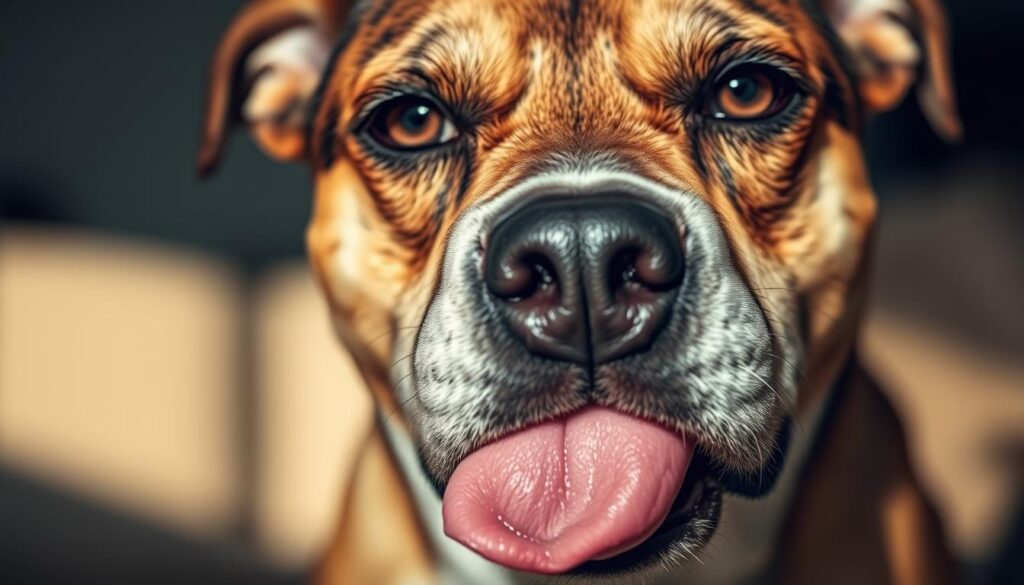
Watch for accompanying symptoms like red skin or ear infections. These signs often appear alongside the compulsive behavior. Identifying these patterns helps pinpoint whether health conditions drive the licking.
Behavioral and Environmental Triggers
Behavioral factors like anxiety and boredom frequently cause obsessive habits. Pets may use licking to cope with separation stress or fear of loud noises. This self-soothing mechanism becomes problematic when it’s constant.
Environmental changes can trigger stress responses. A new family member or schedule disruption might manifest as compulsive licking. Without proper mental stimulation, pets redirect energy into repetitive behaviors.
Understanding whether medical or behavioral issues drive the habit is crucial. This knowledge guides you toward appropriate solutions for your pet’s comfort.
Decoding Surface Licking and Self-Grooming Rituals
When your furry family member engages in their regular cleaning rituals, it’s important to distinguish between normal behavior and potential concerns. Understanding these habits helps you monitor your companion’s health effectively.
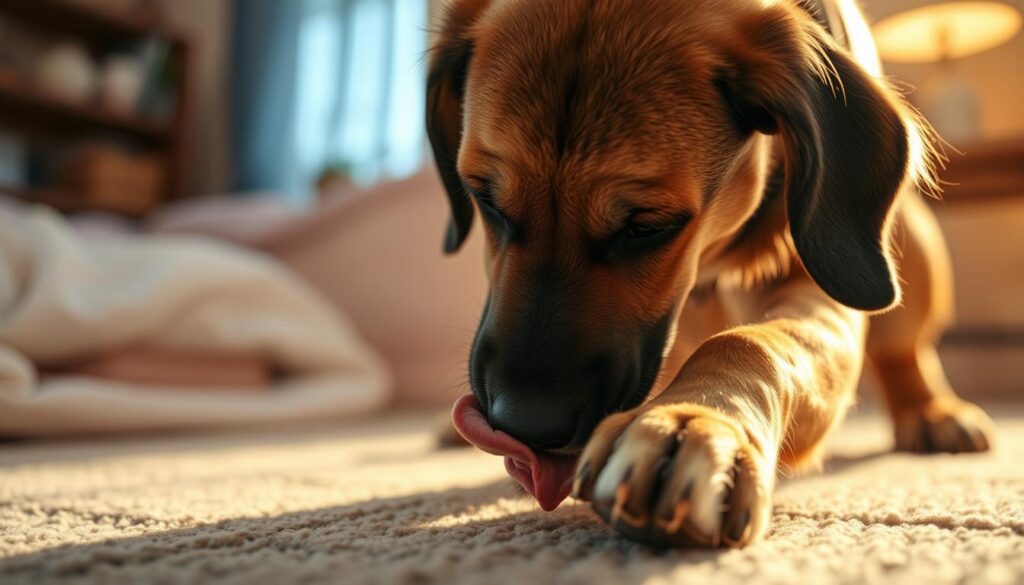
Grooming Habits Explained
Your canine’s grooming routine is a healthy part of their day. Most pets spend time cleaning common body areas like paws, legs, and belly. This light licking maintains their hygiene and comfort.
These animals may focus on specific spots between toes or along joints. Occasional attention to these areas is perfectly normal. It’s simply how they keep themselves feeling fresh.
Recognizing When Licking Becomes Problematic
Problematic behavior shows clear physical signs. You might notice hair loss creating bald patches or red, inflamed skin. The coat may show discoloration from constant moisture.
Some pets lick surfaces like floors or walls obsessively. They may also focus on one area repeatedly. This can indicate underlying discomfort that needs attention.
Watch for behavioral changes like nighttime licking sessions. If your companion interrupts play to groom constantly, it’s time to investigate. Early recognition prevents more serious skin damage.
RELATED: Is Your Puppy Overstimulated?
Identifying Health-Related Triggers: Pain, Infections, and Allergies
Health issues can manifest through obsessive licking behaviors that target particular regions of your pet’s body. When your companion focuses persistently on one spot, it often signals underlying discomfort that needs investigation.
Spotting Signs of Pain and Discomfort
Your canine may lick areas experiencing physical distress. Joint pain from arthritis often causes excessive grooming of legs and paws. Watch for mobility changes like difficulty with stairs or jumping.
Carefully examine the area your pet focuses on. Look for visible injuries, swelling, or heat. These signs indicate potential soft tissue damage or internal issues.
| Behavior Pattern | Possible Health Issue | Recommended Action |
|---|---|---|
| Licking specific joint areas | Arthritis or soft tissue injury | Monitor mobility, consult vet |
| Focus on skin with redness | Infection or allergic reaction | Check for discharge, seek treatment |
| Multiple areas constantly | Widespread allergies or anxiety | Environmental assessment needed |
When to Consult Your Vet
Schedule a veterinary visit if you notice hair loss, persistent redness, or discharge. Sudden behavior changes warrant professional evaluation.
Your vet can perform tests to identify underlying causes. They’ll check for infections, allergies, or internal pain sources. Early intervention prevents complications.
Don’t hesitate to seek advice when grooming becomes excessive. Proper diagnosis ensures your companion receives appropriate relief and care.
Managing Anxiety, Boredom, and Stress in Your Dog
Just like people, your canine companion can experience emotional challenges that affect their daily behavior. When these feelings become overwhelming, pets often develop repetitive habits as coping mechanisms.
How Anxiety Influences Licking
Anxiety is a powerful driver of excessive behavior. When your pet feels stressed or uncertain, they may turn to repetitive actions for comfort. This creates a calming effect by releasing endorphins.
Common triggers include separation when you leave, loud noises, or routine changes. Senior dogs may experience age-related cognitive decline. You might notice increased mouth licking or surface grooming during these stressful times.
Stimulating Activities for Mental Health
Boredom is equally problematic for your pet’s well-being. Without proper enrichment, dogs may develop obsessive behaviors simply from pent-up energy.
Provide regular exercise through long walks or active play sessions. Mental challenges like puzzle toys and obedience training keep their brain engaged. Interactive feeders and socialization opportunities offer productive outlets.
Creating a predictable routine with plenty of attention helps reduce stress-related behaviors. Safe retreat spaces and gradual exposure to triggers support your companion’s emotional health over time.
How to Redirect and Control Excessive Licking: Practical Tips
Managing your pet’s persistent licking habits requires a blend of patience and smart strategies. The goal is not to stop all licking but to guide your companion toward healthier expressions.
A successful plan addresses the root cause while providing clear, consistent alternatives. This approach helps your furry friend feel secure and understood.
Effective Training Techniques
Positive reinforcement is your most powerful tool. Teach a simple command like “sit” or “touch.” Use this command to redirect attention when the licking starts.
Reward your pet immediately with a treat or praise for complying. This method gives them a clear, positive way to earn your attention.
If your dog licks other dogs too much, calmly call them away. Redirect their focus to a toy or a quick game. Consistency from everyone in your home is crucial for your pet to learn the new rules.
Safe Distraction and Enrichment Strategies
Boredom often fuels the need to lick excessively. Provide mental challenges to keep your companion engaged. Puzzle toys filled with food are excellent for this.
Long-lasting chews and interactive feeders make mealtime fun. Rotate toys regularly to maintain interest. These activities offer a productive way to use energy.
For serious cases, your vet might suggest a special diet or medications. Always consult a professional for a proper diagnosis and treatment plan. Remember, change takes time, but with gentle guidance, you can manage this issue effectively.
Conclusion
Your role as a pet parent involves being a detective when it comes to your companion’s habits. Understanding why your furry friend engages in excessive licking requires looking at the complete picture of natural instincts, medical conditions, and behavioral factors.
You’ve learned that while some mouth contact is normal social behavior, persistent grooming that causes hair loss or skin irritation is a clear sign something needs attention. The reasons can range from allergies and pain to stress or boredom.
Working with your vet is crucial for proper diagnosis and treatment. With patience and the right approach, you can help your pet return to comfortable, balanced behaviors and enjoy their best life together.
FAQ
Is it normal for my pet to lick so much?
What are the main medical reasons for this habit?
When should I be concerned about my dog’s licking?
How can I help manage this behavior at home?